
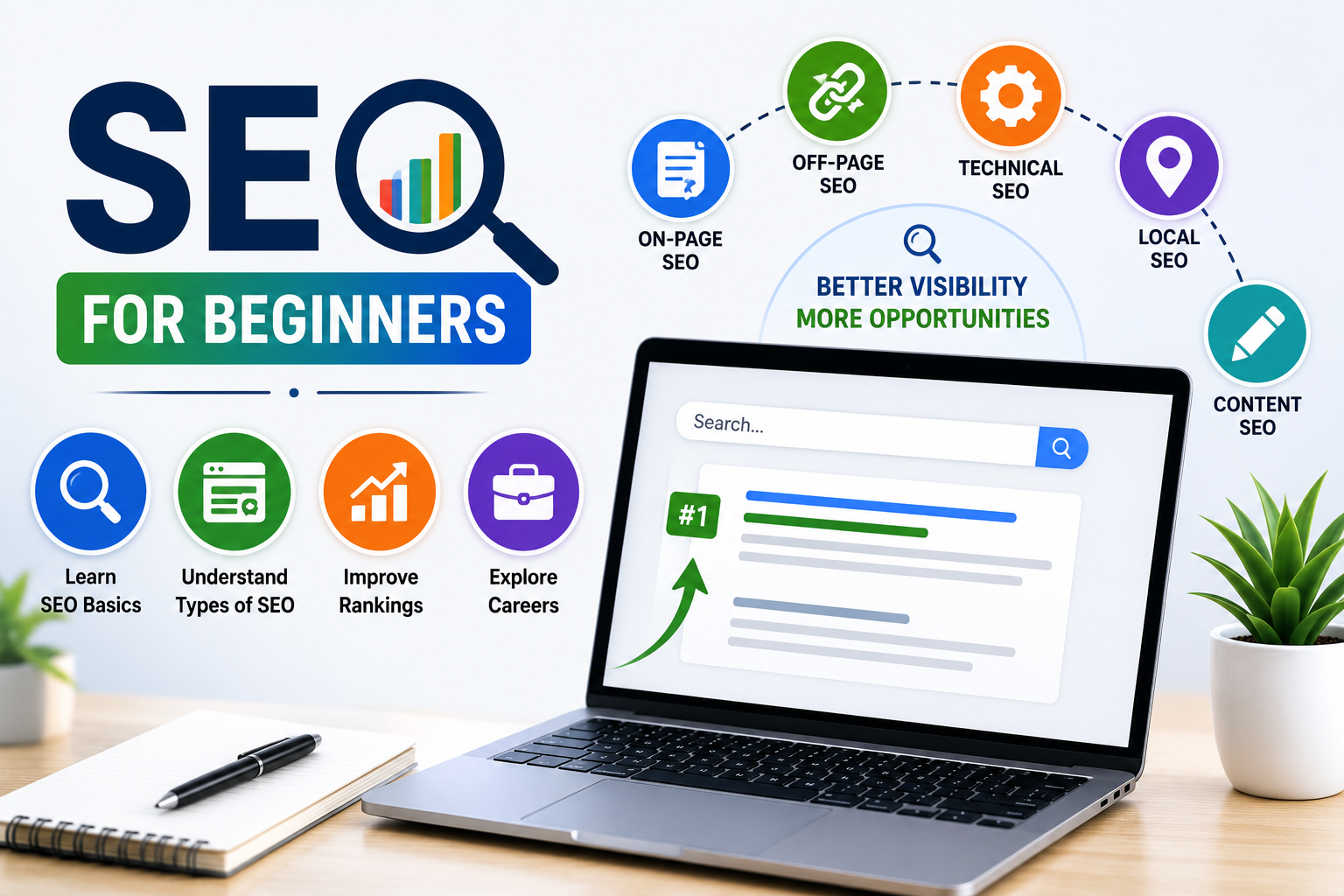
Every day, millions of people use search engines to find answers, products, and services. If a website appears near the top of the search results, it usually receives more visitors than those listed lower down. That is why understanding what is SEO for beginners is important for anyone interested in websites, blogging, or digital marketing. SEO helps search engines understand your content while making it easier for users to find relevant information. This guide explains the basics of SEO, its different types, how it works, and the career opportunities available in 2026.
What Is SEO?
SEO (Search Engine Optimization) is the process of improving a website so it appears higher in search engine results for relevant searches. It involves creating useful content, improving website performance, using relevant keywords, and building trust so search engines can better understand and rank your pages.
What Is SEO for Beginners?
If someone asks what is SEO for beginners, the simplest answer is that SEO helps people find your website through search engines without paying for advertisements. Instead of buying traffic, SEO focuses on improving your website so it becomes more useful, relevant, and trustworthy.
Imagine opening a new bookstore in a busy city. Even if you have excellent books, people may never visit unless they know the shop exists. SEO works in a similar way. It helps search engines identify what your website offers so they can show it to users searching for related topics. The better your website matches user needs, the greater your chances of improving search engine ranking over time.
How Search Engines Work
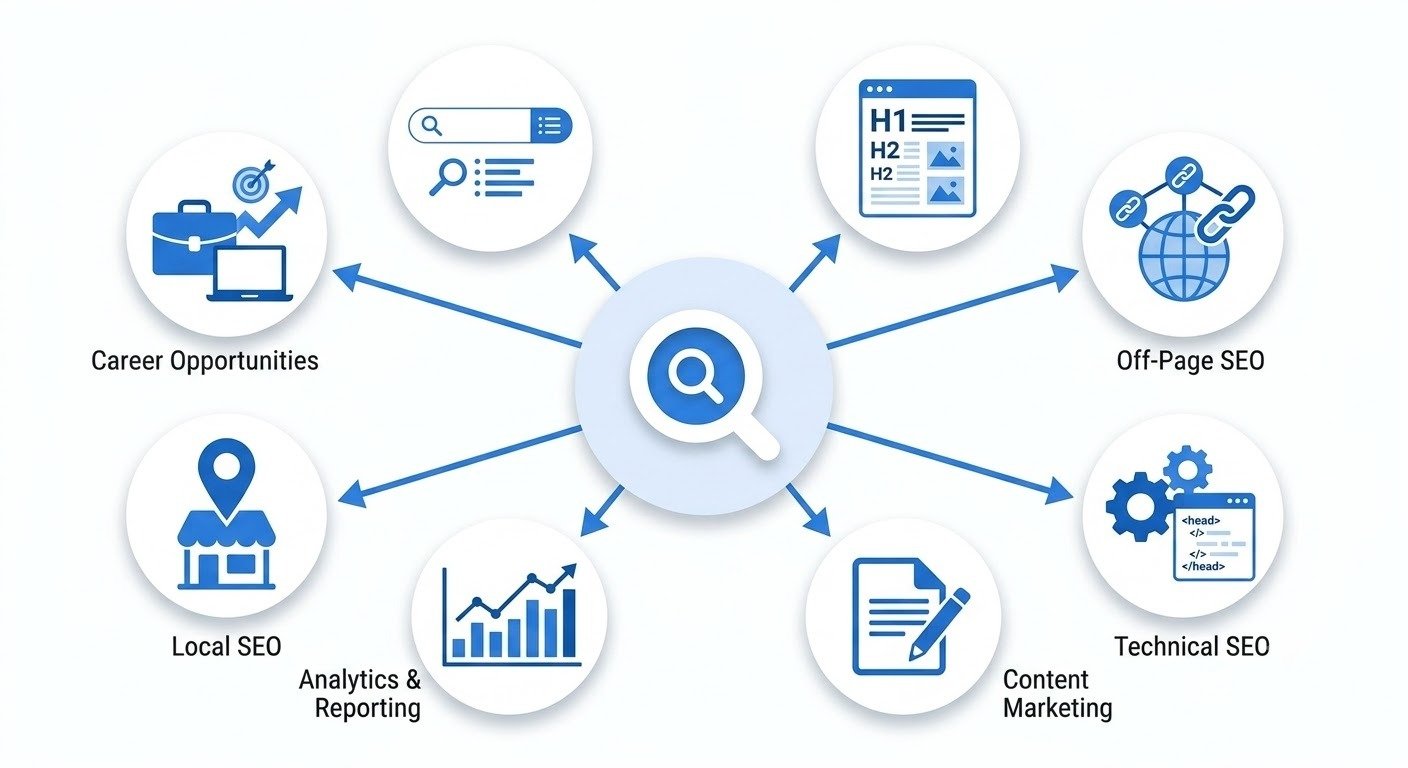
Search engines follow three basic steps before displaying websites in search results. First, they crawl websites by following links across the internet. Next, they index the pages by storing information about their content. Finally, they rank pages based on relevance, quality, usability, and many other signals before presenting results to users.
For beginners, understanding this process is important because SEO is not about tricking search engines. Instead, it focuses on making websites easier to understand and more useful for visitors. A page with clear content, fast loading speed, and helpful information is more likely to perform well than one filled with repetitive keywords or outdated practices.
Main Types of SEO
SEO includes several areas, each focusing on a different part of website optimization. Understanding these categories helps beginners build a complete strategy rather than focusing on a single aspect.
- On-Page SEO – Optimizing titles, headings, content, keywords, images, and internal links.
- Off-Page SEO – Building website authority through quality backlinks, brand mentions, and online reputation.
- Technical SEO – Improving website speed, mobile responsiveness, crawlability, indexing, and site structure.
- Local SEO – Helping businesses appear in local search results and map listings.
- Content SEO – Creating useful, well-structured content that answers user questions and matches search intent.
These SEO types work together rather than independently. A technically strong website with poor content may still struggle, while excellent content may not rank well without proper optimization and authority.
Why SEO Is Important
SEO helps websites reach people who are actively searching for information, products, or services. Unlike paid advertising, where visibility depends on budget, SEO focuses on improving long-term organic visibility through quality content and website improvements.
For example, a local restaurant that optimizes its menu pages, business profile, and customer reviews has a better chance of appearing when nearby users search for restaurants. Similarly, a student writing educational blogs can attract readers consistently by publishing helpful content that answers common search questions.

Basic SEO Skills Every Beginner Should Know
Starting with SEO does not require advanced technical knowledge. One of the first skills is understanding keyword research for beginners, which involves identifying the words and phrases people use when searching online. Choosing relevant keywords helps create content that matches user intent.
Another important skill is writing content that is easy to read and well-organized. Clear headings, descriptive titles, internal links, optimized images, and mobile-friendly pages all improve user experience. Technical basics such as improving page speed and fixing broken links also contribute to stronger SEO performance over time.
Common SEO Mistakes Beginners Should Avoid
Many beginners believe SEO is simply adding keywords repeatedly throughout a page. In reality, keyword stuffing often creates poor readability and may reduce content quality. Modern SEO focuses on answering user questions naturally rather than repeating the same phrase.
Another mistake is ignoring technical issues such as slow-loading pages or poor mobile usability. Even valuable content can struggle if visitors leave because the website is difficult to use. Regular updates, helpful information, and a positive user experience are much more effective than shortcuts promising quick rankings.
SEO Career Opportunities in 2026
As businesses continue investing in digital marketing, the demand for SEO skills remains strong. A growing SEO career can include roles such as SEO Executive, Content SEO Specialist, Technical SEO Analyst, Local SEO Specialist, SEO Strategist, or Digital Marketing Executive. Many companies also hire freelance SEO professionals to manage websites and improve organic visibility.
Beginners often start by working on personal websites, internships, or small business projects. Practical experience builds confidence while helping candidates understand real-world SEO challenges. Over time, combining SEO with content marketing, analytics, and AI tools creates broader career opportunities across different industries.
How to Start Your SEO Journey
The best way to begin is by practicing on a simple website or blog. Publish useful articles, improve page titles, organize headings properly, optimize images, and monitor website performance using tools like Google Search Console and Google Analytics. Practical experience helps concepts become much easier to understand.
SEO is constantly changing because search engines regularly update their algorithms. Staying informed about quality guidelines, user experience, and content improvements will help beginners build lasting skills instead of depending on outdated techniques.
Conclusion
Understanding what is SEO for beginners provides a strong foundation for anyone interested in websites, blogging, or digital marketing. SEO combines quality content, technical improvements, keyword research, and website authority to improve visibility in search results. Rather than expecting instant success, consistent improvements and a focus on helping users produce better long-term results. Educational resources shared by Indore Digital Marketing Institute can also support beginners as they continue building practical SEO knowledge and experience.
Frequently Asked Questions
What is SEO for beginners?
SEO for beginners is the process of learning how to optimize a website so it appears higher in search engine results. It includes keyword research, content optimization, technical SEO, and link building to improve organic traffic and online visibility.
What are the first SEO skills every beginner should learn?
Every beginner should start with keyword research, search intent, on-page SEO, content writing, basic technical SEO, and Google Search Console. Learning these fundamentals creates a strong foundation for advanced SEO strategies.
How long does it take for SEO to show results?
Most websites start seeing SEO improvements within 3 to 6 months. The timeline depends on factors such as website age, competition, content quality, technical optimization, and the consistency of SEO efforts.
Can I learn SEO without coding?
Yes. You do not need coding knowledge to begin learning SEO. Most beginner SEO tasks involve optimizing content, researching keywords, improving page structure, and using SEO tools. Basic HTML knowledge can be helpful later but is not required.
What are the three main types of SEO?
The three main types of SEO are On-Page SEO, Off-Page SEO, and Technical SEO. Together, they improve content relevance, website authority, and technical performance, helping search engines understand and rank your website.
Which free SEO tools should beginners use?
Beginners can start with Google Search Console, Google Analytics 4, Google Keyword Planner, Google Trends, PageSpeed Insights, and Google Business Profile. These tools help monitor website performance, discover keywords, and identify optimization opportunities.
What are the most common SEO mistakes beginners make?
Common beginner SEO mistakes include targeting the wrong keywords, publishing low-quality content, ignoring search intent, neglecting technical SEO, forgetting to use internal linking, and failing to optimize websites for mobile devices and page speed.