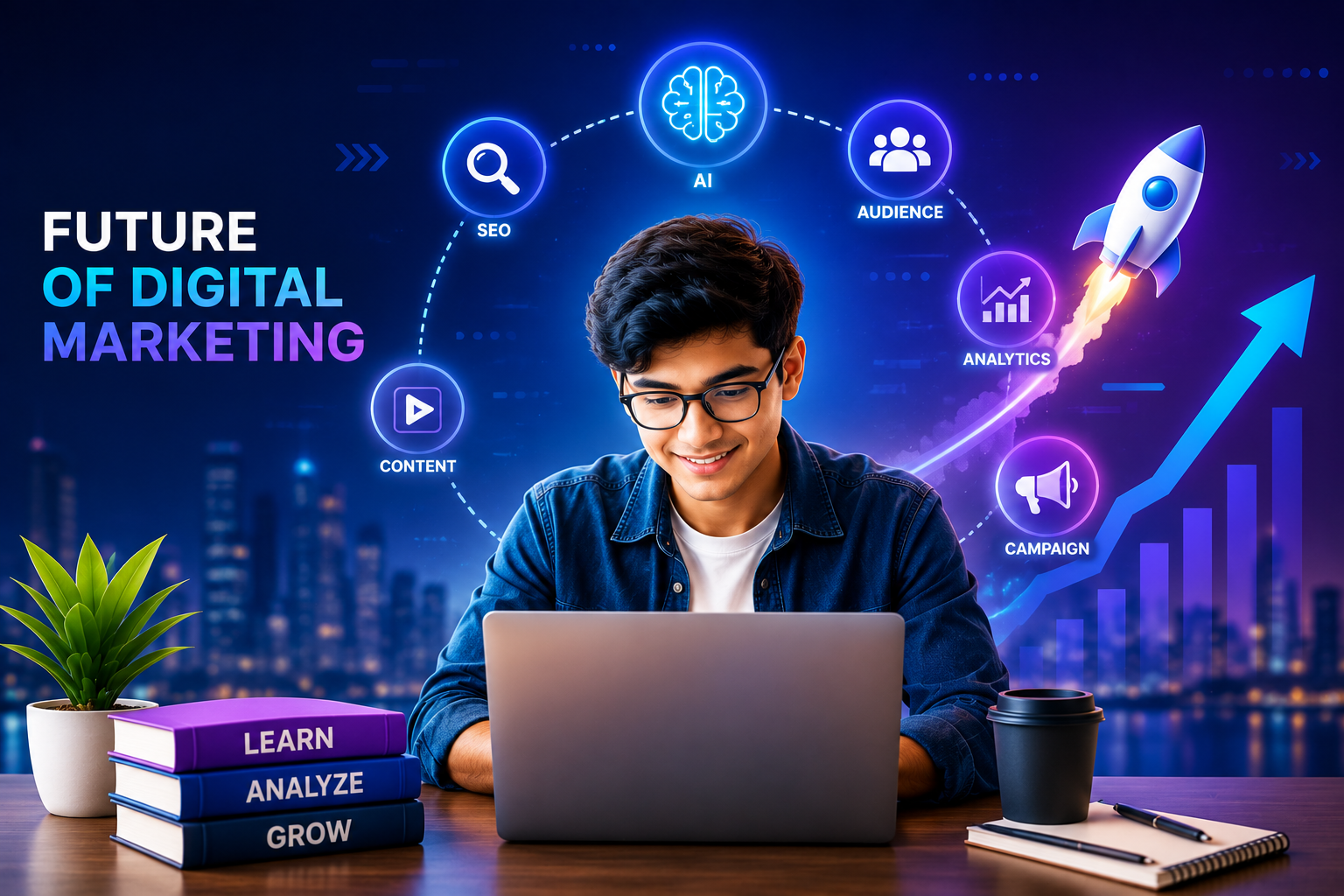
The Future of digital marketing is being shaped by artificial intelligence, automation, changing customer behavior, and new online platforms. Students who build practical knowledge, improve problem-solving abilities, and stay updated with industry changes will have better career opportunities in the coming years. Digital marketing is no longer limited to running ads or posting on social media. It now combines technology, creativity, data analysis, and customer experience to help businesses reach the right audience more effectively.
Whether you are planning a career after graduation or looking to improve your current knowledge, understanding where the industry is heading can help you prepare for long-term success.
What Is the Future of Digital Marketing?
The Future of Digital Marketing focuses on using AI, automation, data, and personalized customer experiences to improve marketing results. Students who develop technical knowledge, creative thinking, communication skills, and practical experience will be better prepared for growing career opportunities in digital marketing.

Why Digital Marketing Is Changing So Quickly
Digital marketing changes because technology and customer expectations continue to evolve. People now expect faster responses, personalized recommendations, and content that matches their interests. Businesses are adapting by using AI tools, automation software, and data-driven decision-making to improve customer experiences.
Another major reason is the growth of online shopping, mobile usage, voice search, and connected devices. Companies are investing more in online marketing because customers spend a large part of their day using search engines, social media platforms, video platforms, and messaging apps. As a result, marketers must understand both technology and consumer behavior instead of relying on traditional marketing methods alone.
AI Is Reshaping How Marketing Works
Artificial intelligence has become a regular part of modern marketing rather than a future concept. AI helps marketers analyze customer data, create content ideas, improve advertising campaigns, automate repetitive tasks, and provide faster customer support through chatbots.
However, AI does not replace human thinking. It supports faster decision-making while people continue to handle strategy, creativity, brand communication, and relationship building. For example, an online store may use AI to recommend products based on previous purchases, but marketers still decide the campaign goals, messaging, and overall customer experience. This balance between technology and human judgment is becoming increasingly important across the industry.
Essential Skills Every Student Should Build
Success in digital marketing depends on combining technical knowledge with practical skills. Employers often value candidates who can understand customer needs, interpret data, and adapt to changing platforms instead of relying on a single specialization.
Students preparing for future digital marketing jobs should focus on building these abilities:
- Search Engine Optimization (SEO)
- Content writing and content planning
- Social media marketing
- Data analysis using tools like Google Analytics
- AI tool usage for research and productivity
- Email marketing
- Paid advertising basics
- Communication and copywriting
- Problem-solving and critical thinking
- Basic website management and user experience understanding
Developing these digital marketing skills through projects, internships, or personal websites often creates stronger practical knowledge than studying theory alone. Even managing a small blog or helping a local business with social media can provide valuable real-world experience.
Career Opportunities Students Can Expect
The demand for skilled digital marketers continues to grow because businesses of every size need an online presence. Startups, educational institutions, healthcare organizations, retailers, financial companies, and manufacturing firms all require marketing teams that understand digital platforms.
Students are no longer limited to one career path. Depending on their interests, they can work in SEO, content marketing, social media management, paid advertising, email marketing, analytics, marketing automation, or AI-assisted campaign management. Freelancing and remote work have also expanded career choices, allowing many professionals to work with clients from different countries while building specialized experience.

How AI and Automation Will Create New Roles
Some students worry that AI will reduce employment opportunities. In reality, many job roles are changing rather than disappearing. Automation removes repetitive tasks, allowing marketers to spend more time on planning, creative thinking, customer research, and business strategy.
For example, instead of manually creating hundreds of advertising reports, marketers can use automation tools to generate reports instantly and focus on improving campaign performance. New positions involving AI content review, prompt writing, automation management, marketing analytics, and customer journey optimization are becoming increasingly common. Students who understand both marketing principles and AI tools will have a stronger advantage as these roles continue to develop.
Is a Digital Marketing Certification Worth It?
A digital marketing certification can provide structured knowledge and help students understand industry concepts. It introduces important topics such as SEO, paid advertising, analytics, content strategy, email marketing, and social media management in an organized way.
However, employers usually look beyond certificates. They often prefer candidates who can demonstrate practical experience through projects, internships, freelance work, or case studies. Combining certification with hands-on practice creates a stronger profile than relying on certificates alone. Even simple portfolio projects can show problem-solving ability and practical understanding of marketing campaigns.
Digital Marketing Trends Students Should Watch
Several digital marketing trends are expected to shape the coming years. Voice search optimization, AI-assisted content creation, short-form videos, first-party data collection, privacy-focused marketing, and personalized customer experiences are becoming increasingly important across industries.
Businesses are also investing more in automation, customer relationship management systems, predictive analytics, and omnichannel marketing. Students who stay informed about these developments will find it easier to adapt as new technologies become part of everyday marketing work. Continuous improvement has become one of the most valuable habits in this field because platforms and consumer behavior rarely remain the same for long.
How Students Can Prepare Today
Preparing for the future does not require expensive tools or years of experience. Small, consistent actions often create meaningful progress over time. Building a habit of reading industry updates, practicing with free marketing tools, and analyzing successful campaigns can improve practical understanding.
Creating a personal website, writing blog articles, managing social media pages, or volunteering for local organizations also provides useful experience. These activities allow students to apply concepts in real situations while building confidence. Employers frequently value evidence of practical work because it demonstrates initiative, adaptability, and problem-solving ability.
Conclusion
The Future of digital marketing will continue to combine technology, creativity, customer understanding, and data-driven decision-making. Students who focus on practical experience, continuous improvement, AI awareness, and strong communication skills will be better prepared for long-term career growth. Building knowledge step by step is more valuable than trying to master everything at once. Educational institutions such as Indore Digital Marketing Institute also reflect how structured learning, combined with practical application, can help students prepare for this rapidly changing industry.
Frequently Asked Questions
1. What is the future of digital marketing for students?
The future of digital marketing offers strong career opportunities because businesses continue expanding their online presence. Students who build practical skills, understand AI tools, and gain real project experience will remain valuable across different industries.
2. Which digital marketing skills are most important in the future?
SEO, content creation, analytics, AI tool usage, social media management, paid advertising, communication, and data interpretation are among the most valuable skills. Combining technical knowledge with practical experience creates better career prospects.
3. Will AI replace digital marketing jobs?
AI will change many marketing tasks but is unlikely to replace marketers completely. Automation handles repetitive work, while humans remain responsible for strategy, creativity, customer relationships, and business decision-making across campaigns.
4. Is a digital marketing certification enough to start a career?
A digital marketing certification provides useful knowledge, but employers usually expect practical experience as well. Building a portfolio, completing internships, and working on real projects helps students demonstrate their abilities more effectively.
5. How can students prepare for future digital marketing careers?
Students should practice with free marketing tools, create personal projects, follow industry updates, understand AI applications, improve communication skills, and build hands-on experience. Continuous improvement is one of the strongest advantages in this field.